Valencia – the city you missed in Spain – and that’s a shame
-
Written by Inbal Cabiri
- Last updated date - March 26, 2025
- No Comments
Valencia with children - and without 🙂
Third time in Valencia and my conclusion is only getting stronger – Valencia is one of the most underrated cities in Spain.
With a gorgeous beach, an ideal size (not too big and not too small), a developed bike path system, convenient public transportation, a crazy park, and a sea of attractions – I really don’t understand how there isn’t a much bigger influx.
It is the third largest city in Spain and has a charm reserved only for its smaller siblings, who developed character in the shadow of their larger ones.
It is a wonderful destination for a vacation with children – and without, even in winter. I visited it three times in winter, as a main destination and as a final stop on trips to southern Spain.
Want to see everything in pictures? Jump to the highlight on Instagram
Table of Contents
How to get to Valencia?
From Israel – As of this writing, I have not found a direct flight. I always search on SkyScanner and you are welcome to check if anything has changed.
There are flights with short connections to all sorts of points in Europe.
From Barcelona – there is a train from Sants station that takes about 2:40 at least.
From Madrid – there is a train that takes a little less than two hours.
The most convenient way in my opinion, for those coming from Barcelona, is by car . It takes about three hours on the highway.
From Madrid – about three and a half hours.
Car rental in Valencia
Two sites that I like for booking a rental car in general and are also suitable for Valencia are –
Rental Cars
A new and useful website that compares car rental prices
I would check with Booking what they have to offer.
Some interesting details about Valencia
800,000 people live in Valencia.
They speak Valencian, which is a different language from Spanish, but very similar to Catalan, the official language in Catalonia (which is also spoken in Aragon and the Balearic Islands, with some variations).
Valencia is also the name of the autonomy located south of Catalonia and north of Andalusia and includes, among other things, Alicante and the Costa Blanca – a coastal strip that is very popular with residents of Northern Europe, at any time of the year.
When to come to Valencia?
Basically, there is no time that is not good.
I always traveled there during the Christmas holidays and the weather was quite comfortable until it was sunny.
The event most associated with the city is the fire festival, Las Fallas, an event on an international scale, which is very worth checking out (and is definitely on my list).
It takes place every year in early March and you can read details on the official website of the Tourist Bureau.
Where to sleep? Recommended hotels and apartments in Valencia
Places I stayed at –
Rooms Ciencias
Very spacious aparthotel with a restaurant at the bottom, a very short walk from the City of Arts and Sciences. Our apartment was very large and spacious/
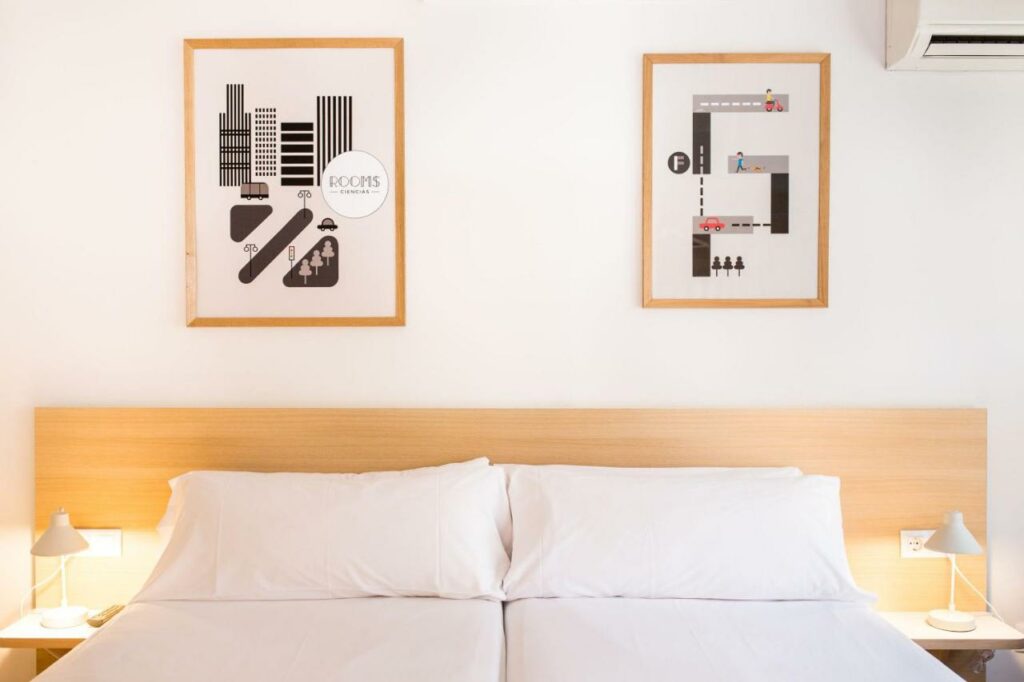
Opposite the park, outside the old city – very convenient for those arriving by car. Adjacent to a shopping center that had all kinds of Christmas activities. At breakfast there were tables and crafts for children (genius!). They have connecting rooms for families and also an indoor pool 🙂
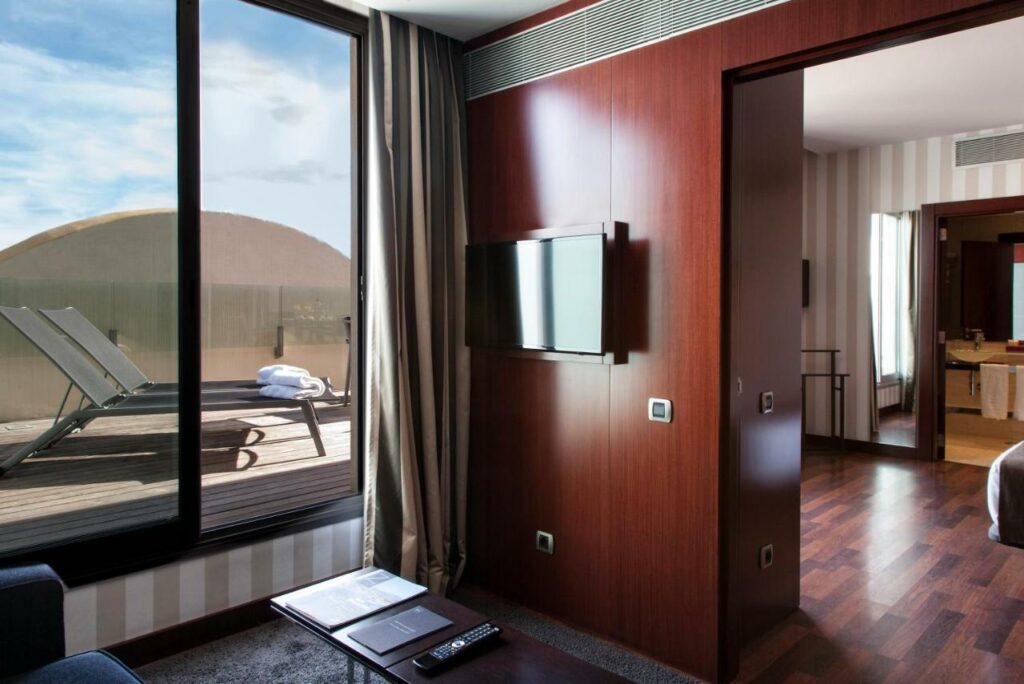
Four-star hotel across from the train station (we didn’t have any noise, the train itself was quite far from the room). A five-minute walk from the main square and right across from the churros stand 🙂 The breakfast included in the price was a great bonus.
More worthwhile and recommended hotels –
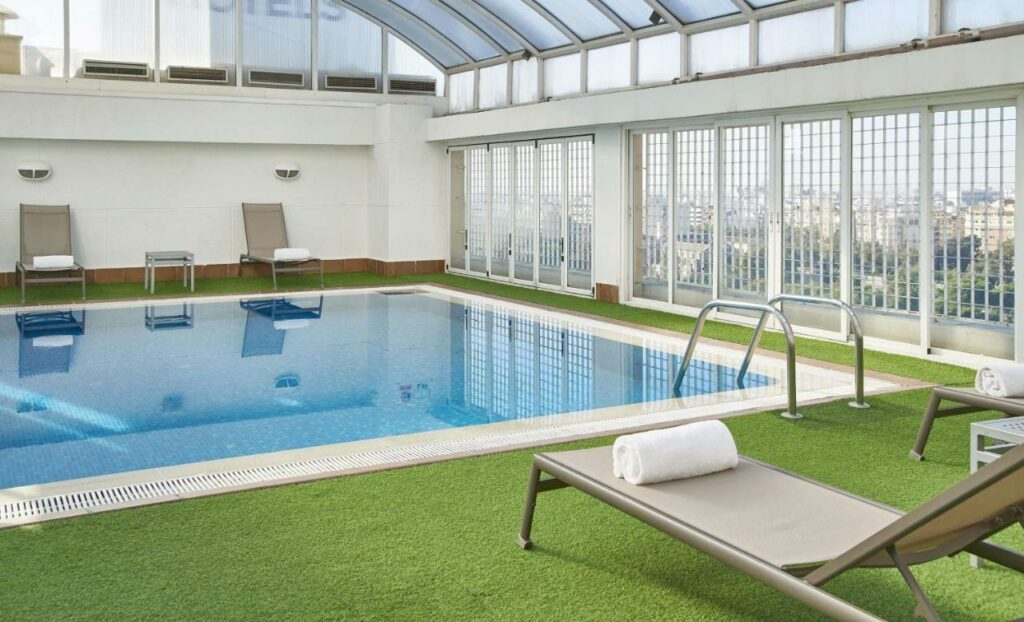
Very central hotel close to the market, with a large spa and indoor pool. They also have a family apartment.
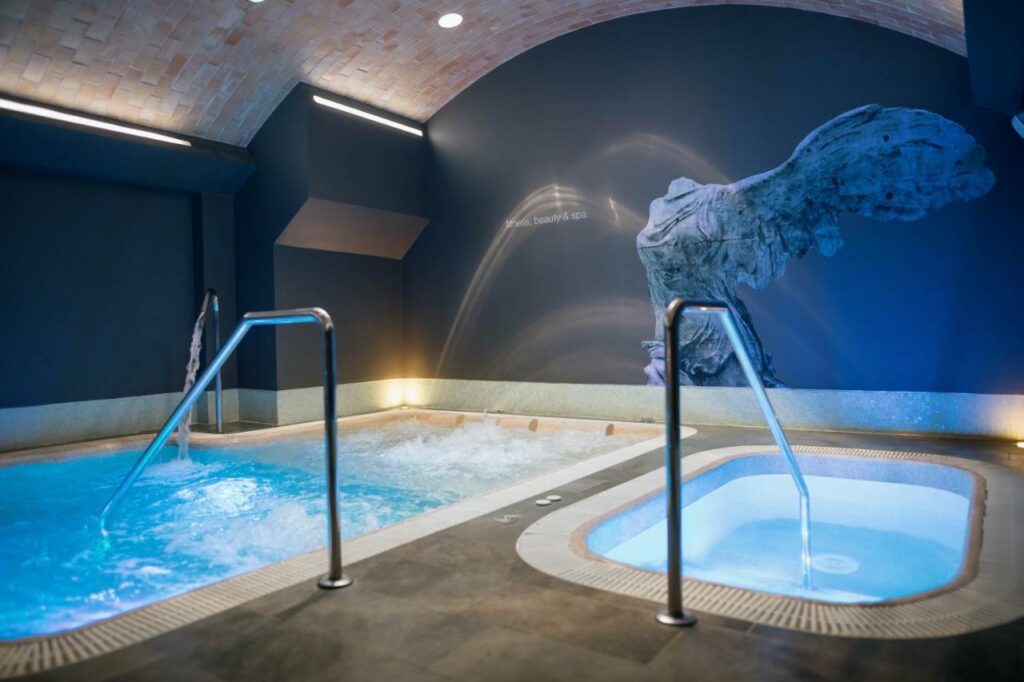
Only YOU Hotel Valencia
Beautiful five-star hotel in a very central location, close to the town square. Beautifully designed rooms.
The fireplace of the hotel in Madrid , located right across from Atocha train station.
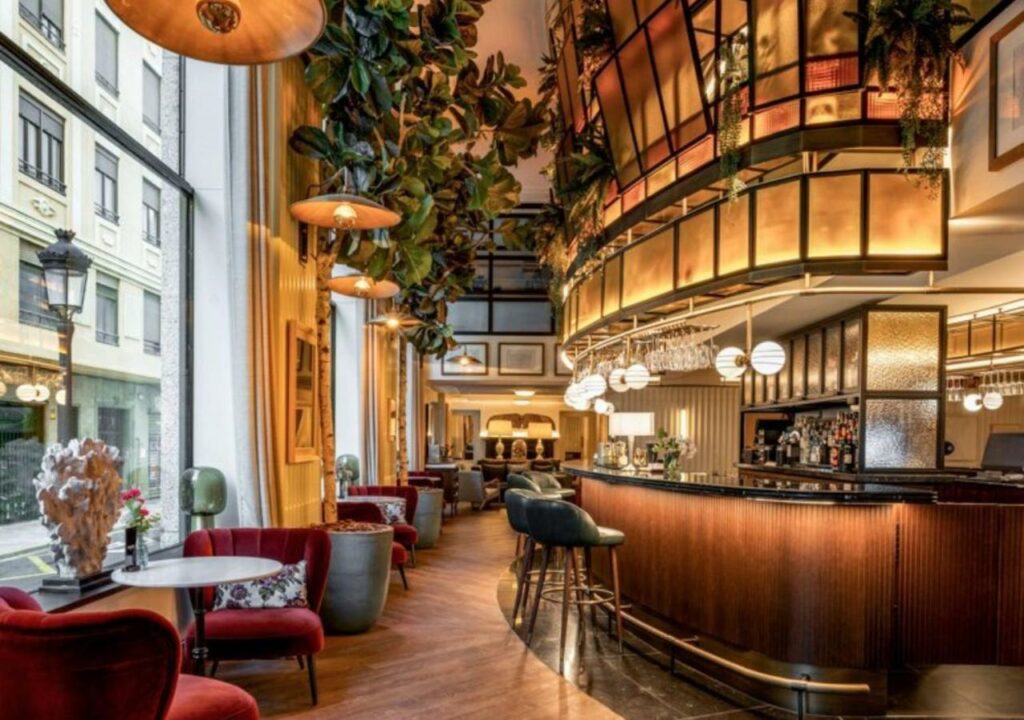
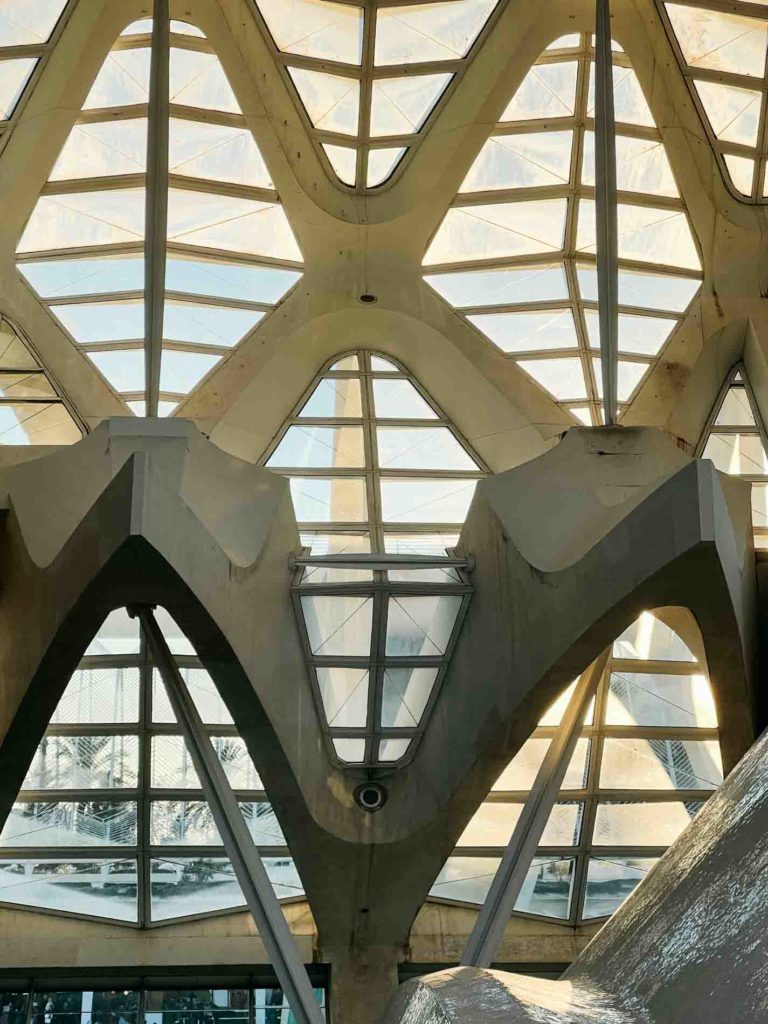
A place that should not be missed in any way . First of all, the very impressive architectural structure of Santiago Calatrava , the famous Spanish architect (the String Bridge in Jerusalem, the communications tower on the Jewish Mount in Valencia, bridges in Bilbao, Valencia and many more).
If in Jerusalem it was a design crime to place this bridge, no matter how beautiful, at the crowded entrance to the city, between the central bus station and the even more crowded Kiryat Moshe neighborhood – here the magnificent creation has a place and that is exactly what it needs.
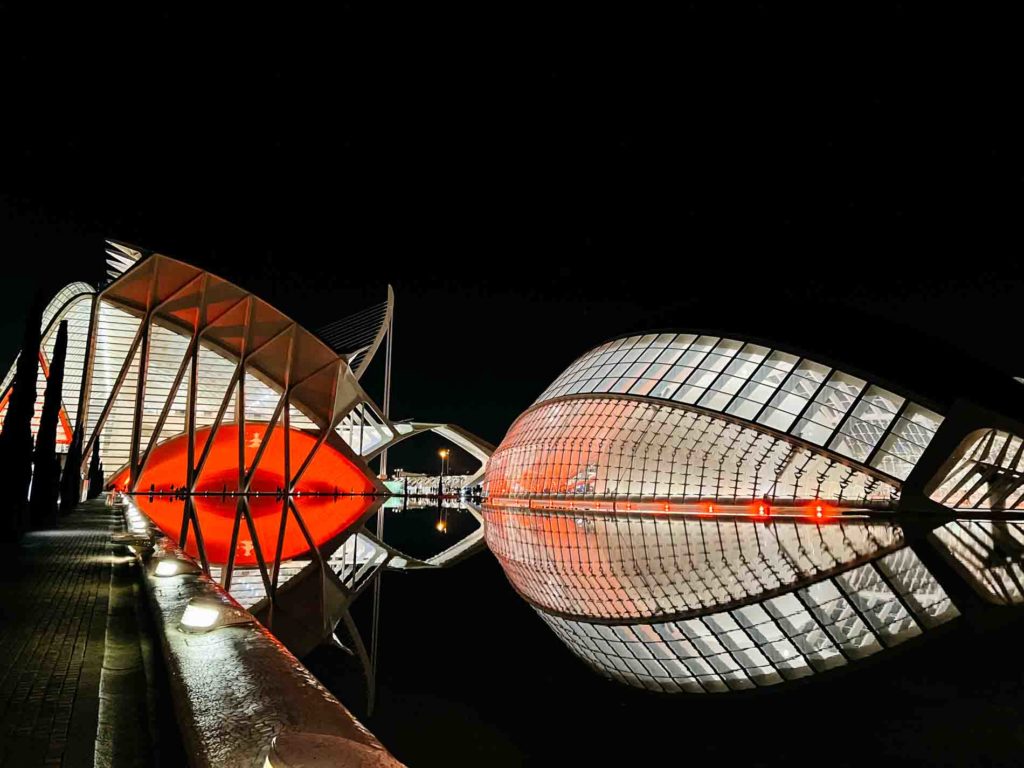
And if you were impressed by the architecture during the day, wait for the night – the reflection of all the buildings in the water is simply breathtaking.
Several buildings in the complex –
**It is worth deciding in advance which buildings you are going to and buying a combined ticket (also possible for several days)
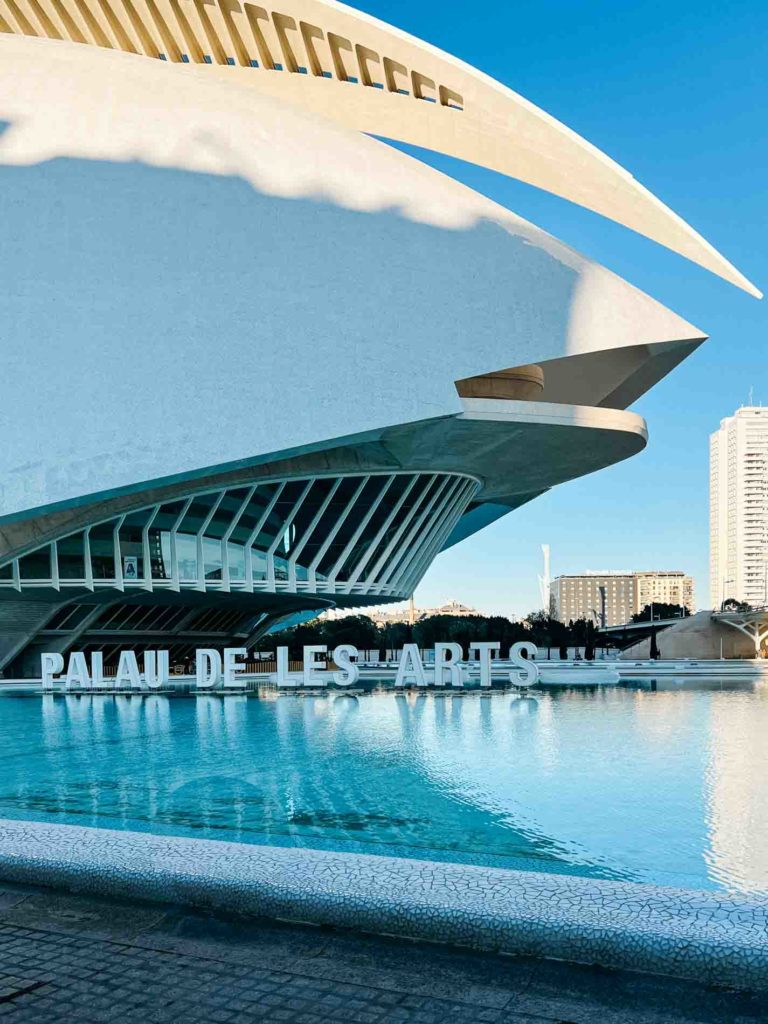
PALAU DE LES ARTS – Palace of the Arts
A performing arts center. You can find a variety of music and dance performances here.
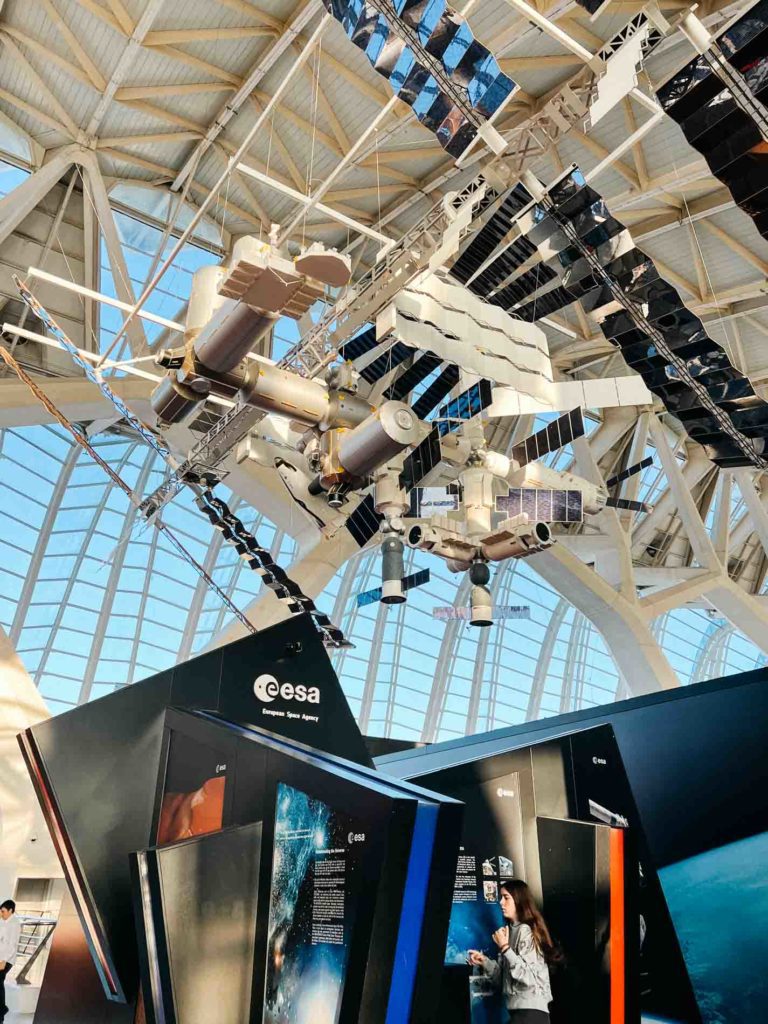
Science Museum – Science Museum
A three-story science museum spanning more than 26K square meters, which presents everything related to life, science and technology in a didactic, interactive and entertaining way.
The main feature of the museum is its full interactivity, under the motto “Don’t touch, don’t feel, don’t think.”
There is a huge variety of seasonal exhibitions and scientific activities of all kinds here, designed to arouse the visitor’s curiosity about new technologies and scientific advances and to create a pleasant learning process in which the visitor always takes an active part and decides where he wants to go and what he wants to know.
Tip: If you are coming during the peak season, you should consider arriving at noon (area 13-14), when most of the crowd goes outside to eat and thus enjoy lighter traffic and fewer lines inside.
We (your faithful servant + children aged 11 and 7) spent a busy and packed half a day here and didn’t have time to see everything.
HEMISFÈRIC – Movie Theater
Inaugurated in 1998, the Hemisfèric was the first building in the City of Arts and Sciences to open its doors to the public. It is a spectacular construction designed by Santiago Calatrava, with a roof over 100 meters long that contains the large sphere that constitutes the screening room.
Here you can watch movies on a huge screen, some of which are 3D.
We watched a movie about underwater animals, which was very nice.
Less convenient for people who wear glasses, but what can’t they do for the kids?
OCEANOGRÀFIC – The Aquarium
The largest aquarium in Europe, containing representatives of the world’s main marine ecosystems. Each building is associated with a different environment – the Mediterranean, marshes, temperate and tropical seas, oceans, Antarctica, the Arctic, islands and the Red Sea. There is also a dolphinarium. The underwater restaurant and the access building that welcomes visitors stand out for their spectacular roofs designed by Felix Candela.
ÀGORA -CaixaForum Valencia – Art Museum
A multi-purpose space to promote knowledge, science, and culture with the aim of promoting social change.
CaixaForum provides a wide range of diverse cultural activities – from art exhibitions, lecture series, concerts and performances, social seminars and even family and educational workshops designed for all ages.
Turia Park
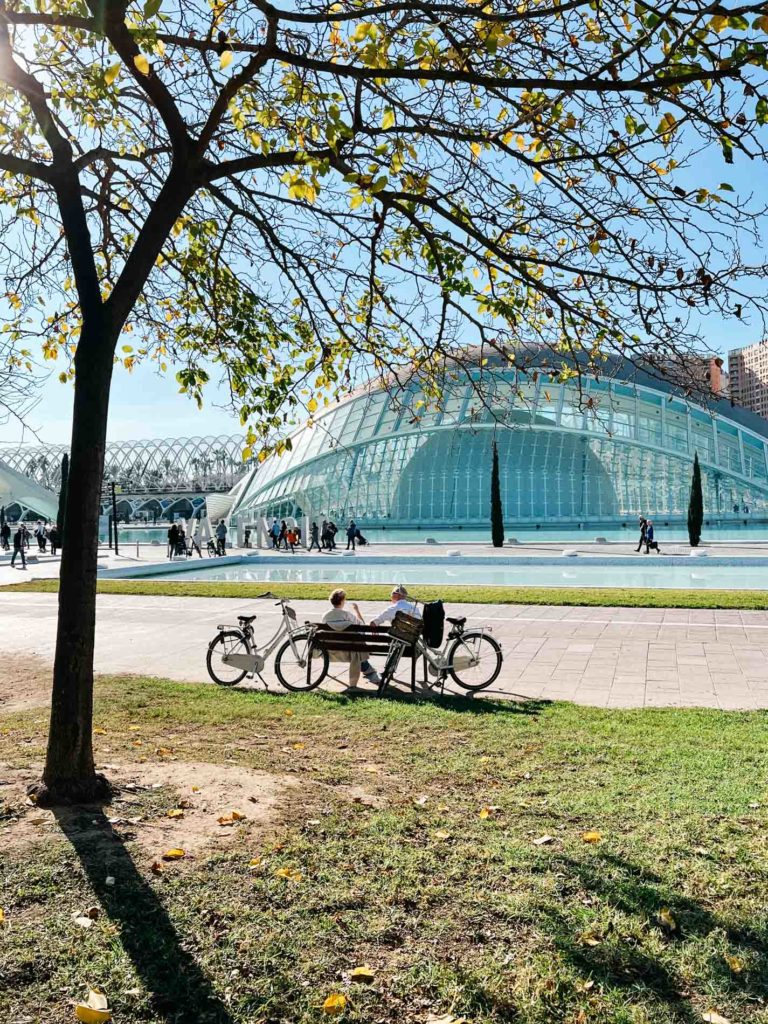
One of the largest urban parks in Spain, it runs through the city along nine kilometers of green space boasting walking paths, recreational and sports areas, and romantic places to escape the hustle and bustle of the city.
It is the perfect place for runners, cyclists, families and nature lovers. It is crossed by 18 bridges full of history,
The vast gardens, inaugurated in 1986, are built on the former Turia riverbed, which was diverted to prevent constant flooding in the city. After a devastating flood on October 14, 1957, the Turia route was diverted south of the city, leaving a huge expanse of land that crosses the city from west to east, bordering the historic center. Several urban and landscape planners designed different sections of the park, recreating the former riverscapes. They created a unique path of palm and orange trees, fountains and pine forests, aromatic plants and ponds, sports facilities and rose beds.
How can you walk in the park?
On foot, by bicycle (there are lots of rental stations throughout the city and also near the park), and all kinds of transportation that can be rented at the entrance to the Science Museum.
There are different types of scooters and pedal bikes out there – for single, double or quad, some manual (or more precisely, foot) and some motorized.
If you want to go further, take the motorized ones, which cost 5 euros more. It’s worth the investment (one who knows, and visited there 3 days in a row).
Tip: Go a little before sunset and you’ll get to see the City of Arts and Sciences in both light and darkness. A spectacular experience.
In winter, take a coat, gloves, and a scarf for riding.
Gulliver Park
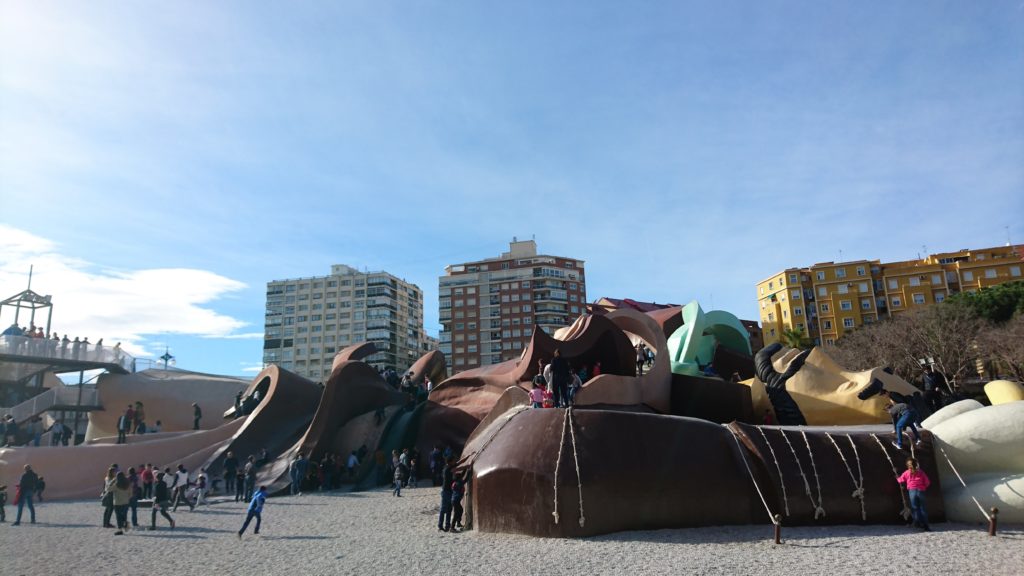
Jonathan Swift, the famous author of the popular novel “Gulliver’s Travels”, made a small mistake in his calculation. It turns out that Lilliput, the kingdom of tiny creatures, is not on an island near Tasmania. No. Because friends, Lilliput is in the municipal garden of Turia, in the heart of Valencia! More precisely, between the Guardian Angel and the Kingdom Bridges. In the park that bears the name of this universal character, a giant figure of Gulliver, almost seventy meters long and nine meters high, lies, tied to the ground and motionless. The giant who fell has stairs and ramps to go up and down, fast slides and ropes that are fun to climb. As a result, children are queuing up for the tiny Lilliputians while enjoying this original attraction. Well, many children and parents are eager to return to their childhood and enjoy this unique park in the world.
Access to the playground has been upgraded and includes accessible ramps. The area is perfect for picnics in Valencia’s greenest and most pleasant surroundings. Around the park there are fun benches in suggestive positions, so you can imitate Gulliver and stay lying down, as well as a vending machine area.
The cool Ruzafa neighborhood
A very important discovery from the last trip.
The trendy Rusape district is full of cafes, small art galleries, indie clothing boutiques and organic food stores, as well as bars and clubs open until the wee hours of the night.
A very, very cool and fun area to hang out in, with kids or better yet – without 🙂
The market – really beautiful from the outside and I assume from the inside too (it was closed when I passed by).
Cute shops
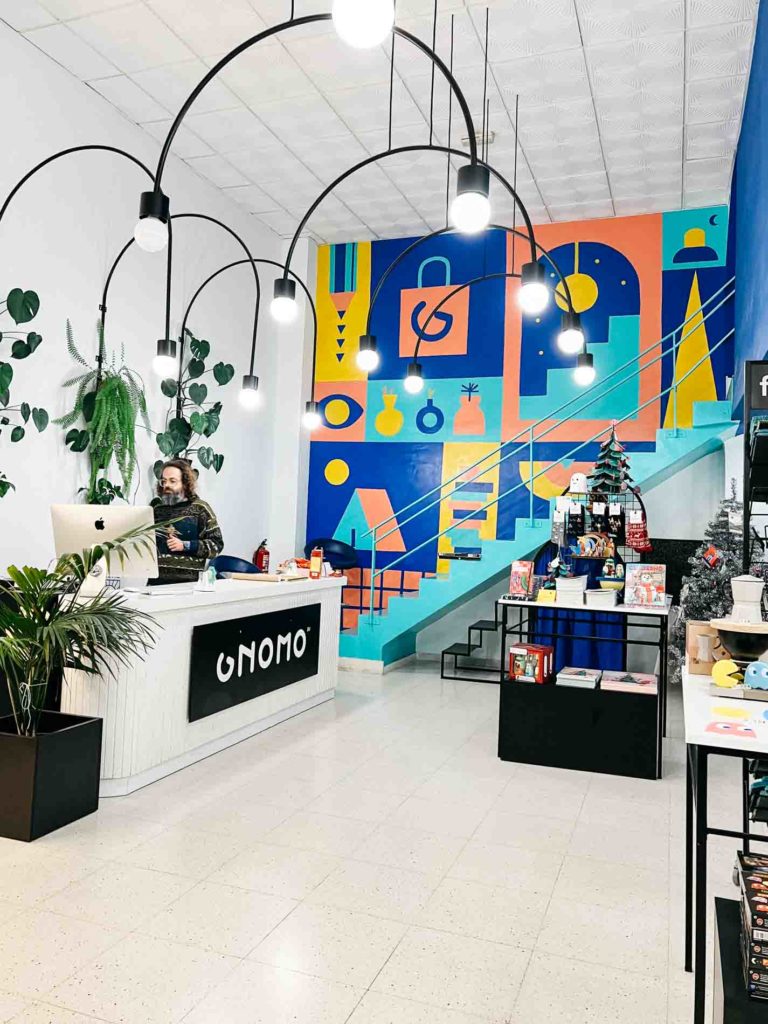
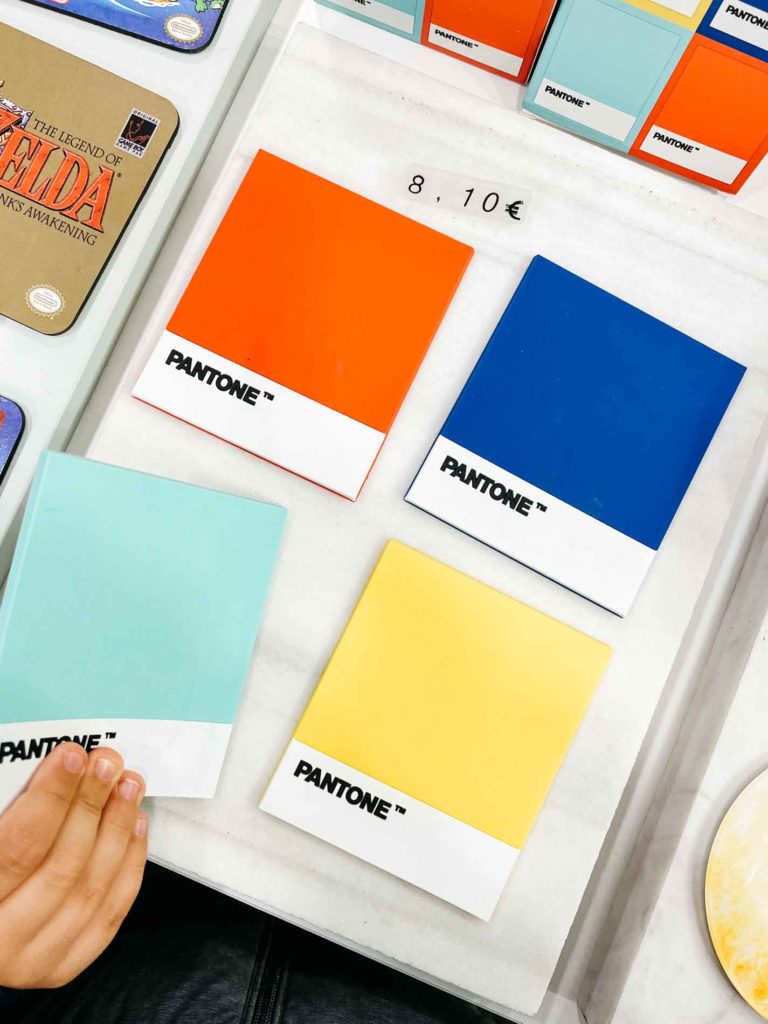
Gnomo – A gift shop and designed things that are really beautiful to look at
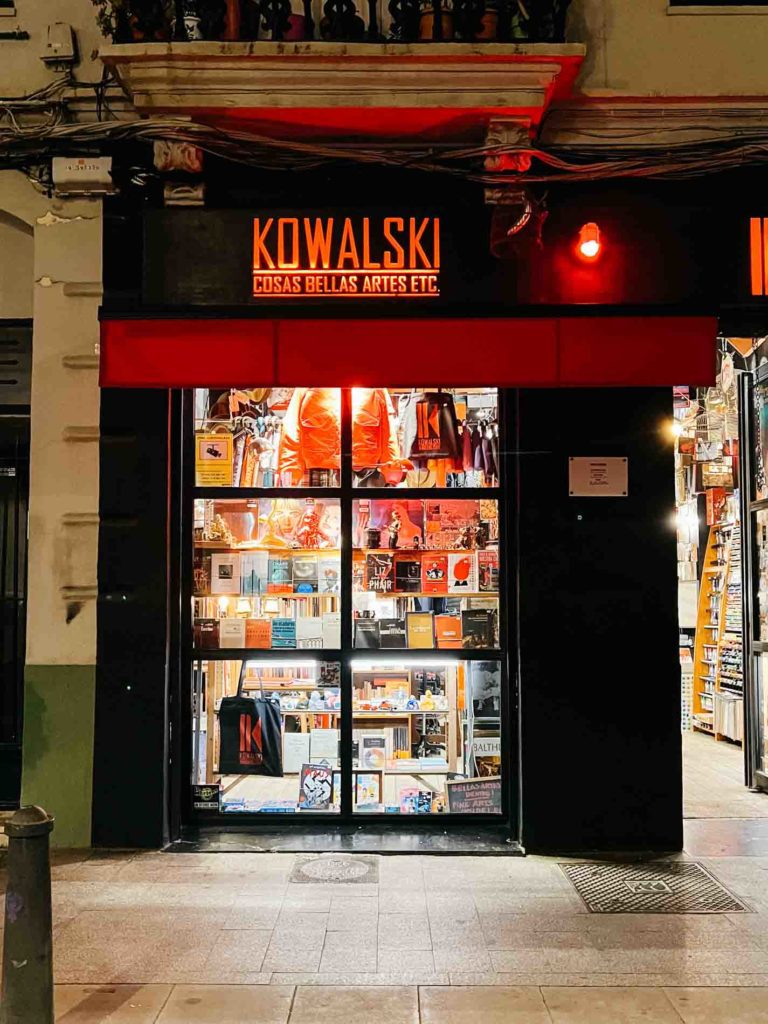
Kowalski Bellas Artes – An interesting and slightly strange combination of art materials, men’s clothing and umbrellas
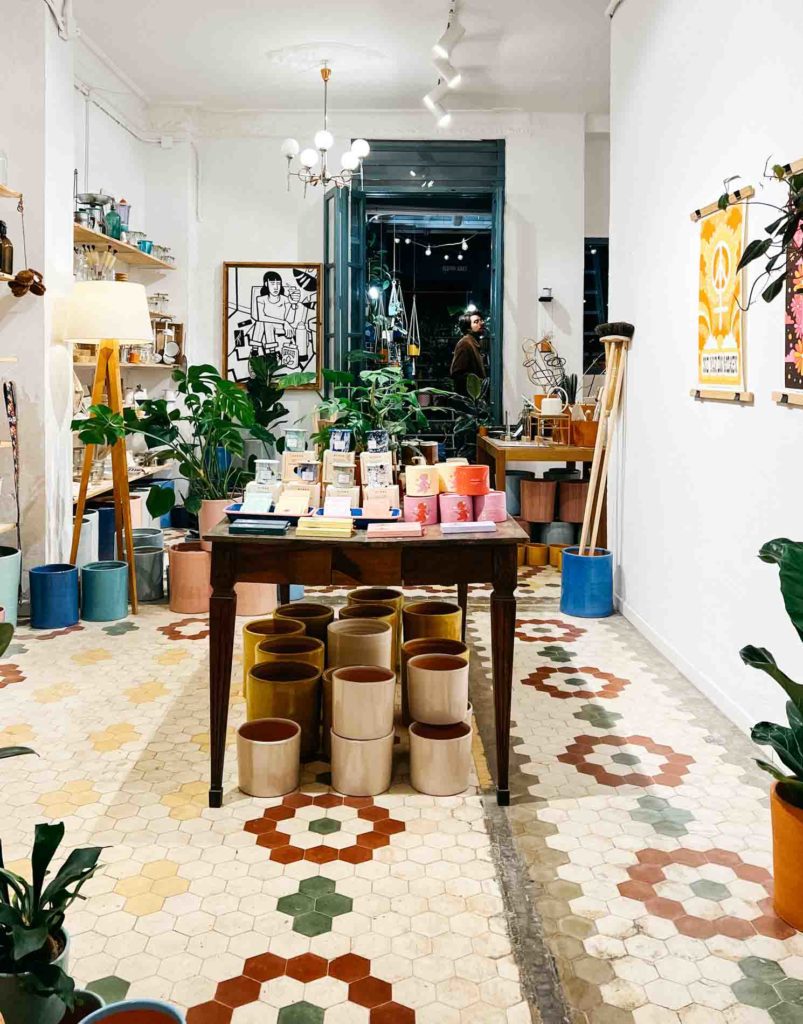
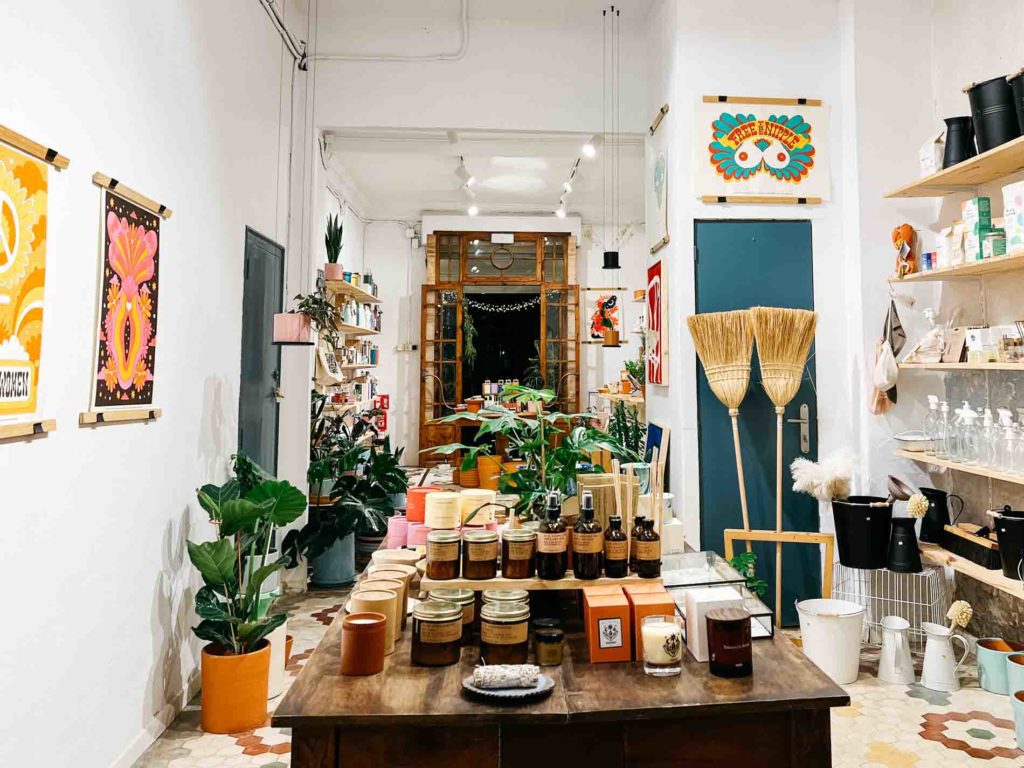
Hinojo Bazar – A beautiful shop selling flower pots and other household items

Food - Recommended restaurants in Valencia
Restaurants we liked –
Swagat – Cute Indian Restaurant
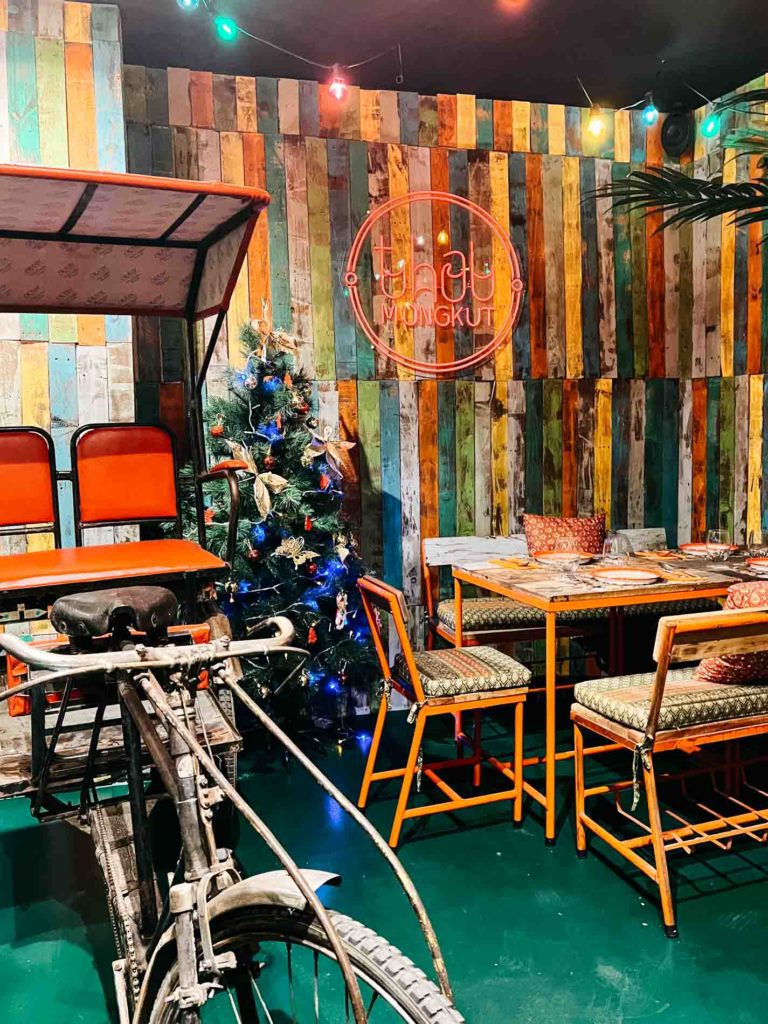
Thai Mongkut – Really good Thai, with lots of vegetarian and vegan options. There are several branches.
Ubik Cafè Cafeteria Llibreria – A cafe inside a gorgeous bookstore. One of the places with character, where you should drink coffee, leaf through an avant-garde magazine and enjoy the company. The food – less
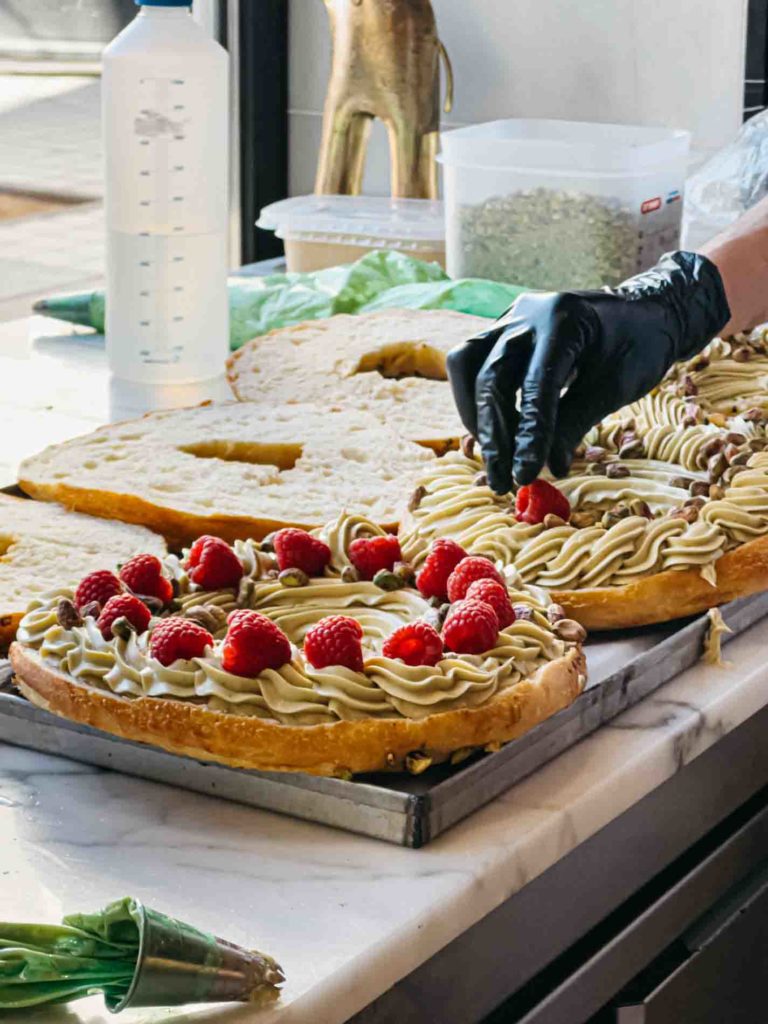
Foron Bekaa – Lebanese pastry shop of the high price. The amouls were a little hard, but delicious. The knave in the brioche was warmed in the microwave so the part went a bit. If it was on its own, I think it would be better because it is not sweet and it is wonderful
There are several Chinese streets in the train station area, and it seems like there’s a crazy food scene there that we didn’t get to sample simply because we didn’t make a reservation and there was a crazy line. It’s worth checking out.
If you’re in the area, the specialty is paella and horchata (a nut milk drink). Since we’re not fans of either, I don’t have any recommendations – but give it a try. You might fall in love.
sea
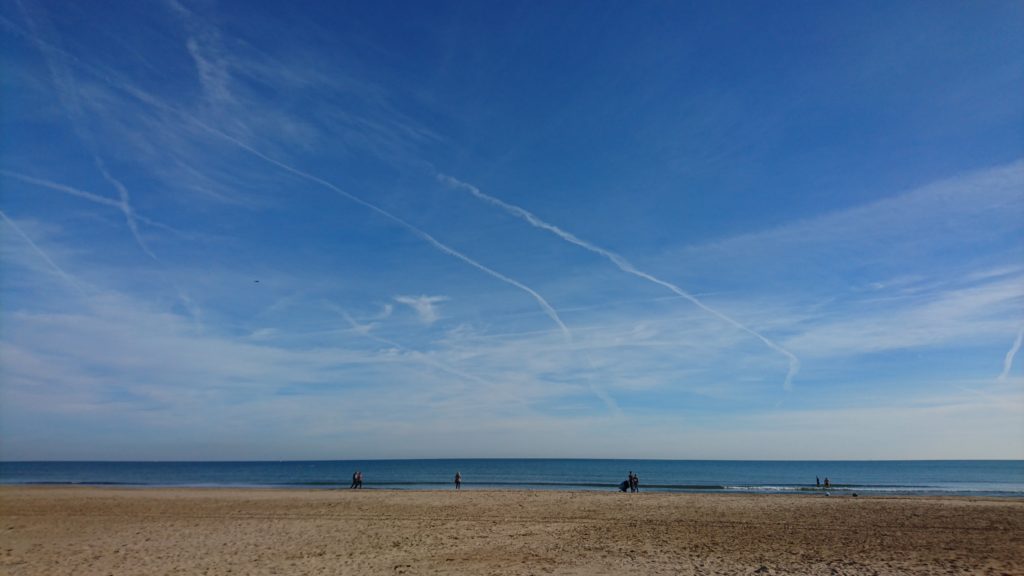
Valencia has a sandy, quiet and pleasant beach.
You can spend a few hours here in peace, walk on the promenade and sit down to eat somewhere.
Last time we really enjoyed La Girafe Patacona – a cool restaurant with a kitchen inside a (real) bus and a beautiful backyard. On weekends it’s worth making a reservation in advance.
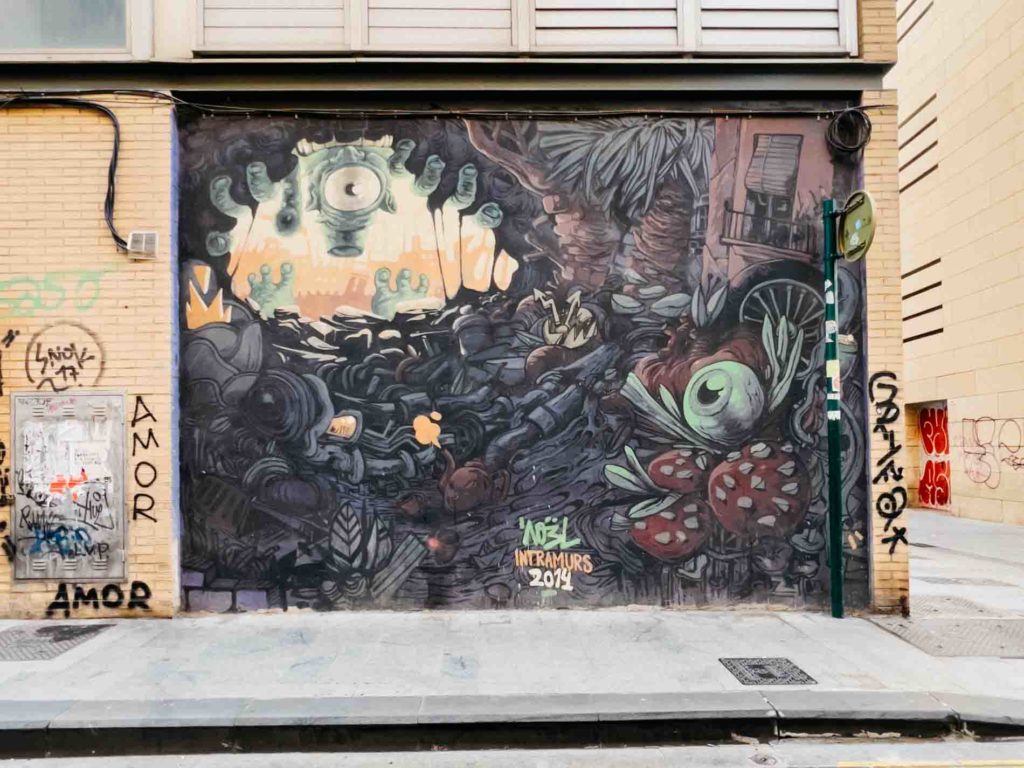
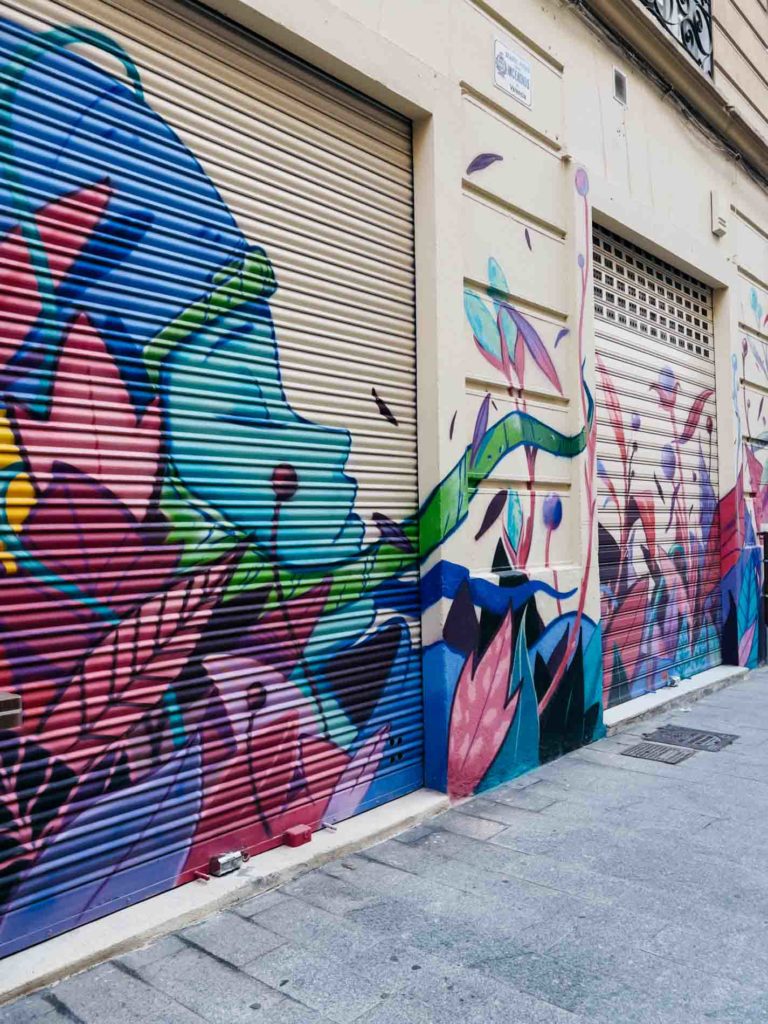
Street art in Valencia
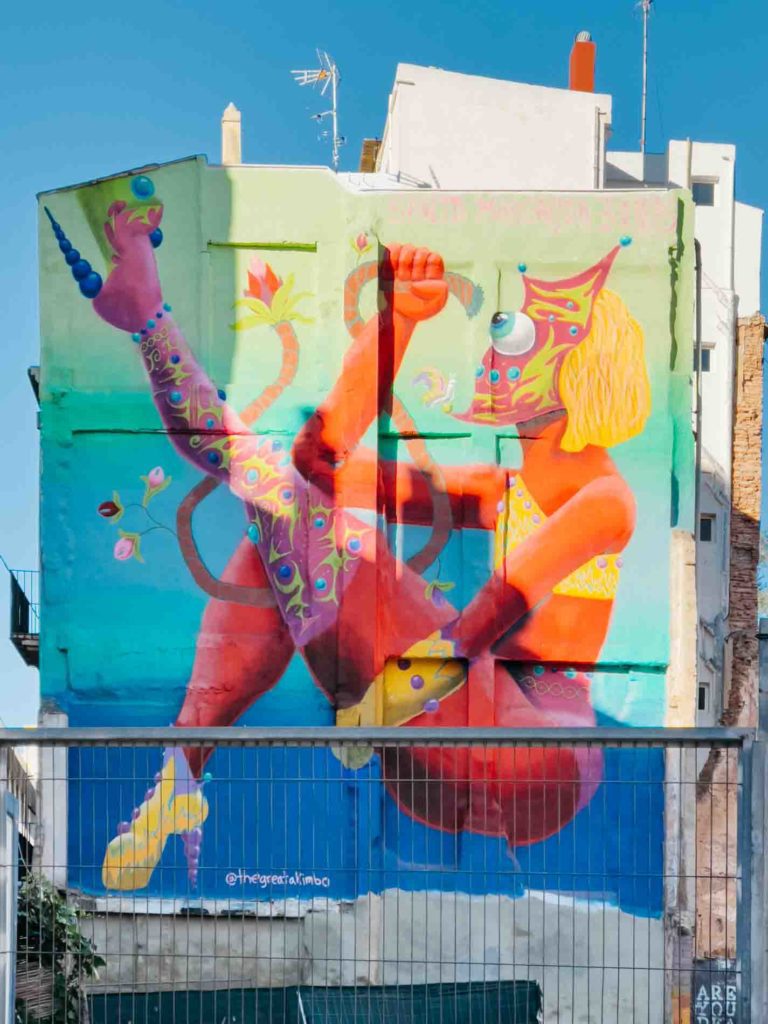
I ended up in this district of the old city by chance. I wanted to go to the IVAM museum, but halfway there I found out it was closed. Unfortunately, I found an old pin on my Google Maps, which showed me that I was 3 minutes away from the area of these beautiful murals.
How do we get there?
Google Urbane Kunst .
Where to go from Valencia?
Valencia can be an excellent stopover on the way to southern Spain.
You can base yourself in Alicante or continue to wonderful Andalusia .
Valencia - Frequently Asked Questions and Answers
The recommended months are May–June and September–October, when the weather is pleasant and there are no tourist crowds.
You can see most of the attractions in 2–3 days, but it is recommended to stay 4–5 days to also enjoy the sea and the surrounding area.
Very much! It has the Park of Arts and Sciences, Gulliver Park, an amazing aquarium, Turia Gardens, shallow beaches and a relaxed atmosphere.
The City of Arts and Sciences, the old city center, Malabarossa Beach, the Central Market (Mercado Central) and a tasting of original paella.
By high-speed train (AVE) in about 3 hours, or by short flight. You can also combine it with a car trip via the Costa Blanca.
Have you been to Valencia?
Do you agree that it is underrated?
What did you like there?

Are you already part of the Vicky and Christina travel community?
A unique community where you have the opportunity to find the best places for food/hiking/art, from locals who live right there
You might also be interested in -
Don't miss any new posts. Register here


Search by topic
All topics
Accommodation (7)
Architecture (1)
Beaches (3)
Beautiful sites (7)
Cafe (2)
Day trip (2)
Design (1)
Features (6)
Festivals (1)
Food (8)
Gaudi (2)
guide (1)
guided tour (2)
Hike (2)
hotels guide (5)
Kids free (0)
kids friendly (7)
Lakes (0)
map (0)
Market (1)
Michelin guide (3)
Museums (4)
observatory (3)
Outside Barcelona (1)
Recipe (0)
Restaurants recommendations (5)
Ropes Park (1)
sightseeing (2)
Slow food (0)
Slow living (2)
Spanish Food (6)
streetart (2)
Summer (1)
Sustainability (2)
Sustainable Tourism (2)
Sweets (0)
Tour (1)
Trip planning (0)
Urban travel (6)
Veggie friendly (4)
Views (3)

–
- How to Eat at Michelin Restaurants Without Breaking the Bank? October 1, 2026
- The Cheese That Tells the Story of Italy’s Aosta Valley September 14, 2026
- Everyone Loves Spain. That’s the Problem. Overtourism in Spain May 13, 2026
- Hungry for More: A Culinary Journey Through Beautiful Basque Country April 1, 2025

Looking for the most beautiful, delicious, and inspiring places?
Vicky & Cristina always know where to go.
Want to know who’s behind the scenes? Read here