By Inbal Cabiri
Spain has no shortage of celebrated destinations. But tucked into the least-populated corner of the Iberian Peninsula – where the land opens into low rolling hills, rust-colored soil, and the occasional sunflower field – lies a city that wears one of the world’s more unexpected titles: World Mushroom Capital.
That title was bestowed by none other than Ferran Adrià, the legendary chef behind the now-mythical elBulli, who visited Soria for its very first mushroom congress in 2005. He wasn’t wrong.
Where Is Soria – and Why Does That Matter?
Soria sits in the heart of Castilla y León in northern Spain, averaging just nine inhabitants per square kilometer. It’s the kind of place that doesn’t appear on most tourists’ radars, which is precisely what makes it worth visiting.
The province is home to over 2,700 documented species of wild mushrooms, most of them concentrated in the forests surrounding the city. In autumn and early winter, Soria transforms into a pilgrimage destination for food lovers, foragers, and chefs from across Europe.
Best time to visit: October through February, when mushroom season is in full swing and the riverside forests turn gold.
Buscasetas: The Congress That Put Soria on the Map
Every two years, Soria hosts Buscasetas, a biennial mushroom congress organized in partnership with the regional government of Castilla y León, the city council, and the European Institute of Mycology. This year’s eighth edition brought together 13 chefs holding a combined 10 Michelin stars, alongside wine and tourism experts from Spain, Canada, France, Italy, Portugal, and Japan.
Over two days, chefs demonstrated creative techniques with mushrooms across four dimensions – savory, sweet, liquid, and frozen – producing dozens of exquisite dishes. Among the highlights: a session by Canadian sommelier François Chartier, who broke down the molecular science of pairing wine with mushrooms. (Yes, this is a real field of research. And yes, it makes you want to book a trip immediately.)
Truffle Hunting in the Wild: Encitruf Farm
About 15 minutes outside Soria, on the edge of the small town of Osona, lies Encitruf Farm – a working black truffle operation run by husband and wife Javier López and Peli Sánchez.
Thirty years ago, the couple were passionate truffle hunters. Then they decided to crack the secret of cultivating them. They traveled to France, learned that truffles grow in symbiosis with oak trees in limestone soil at specific temperatures, and came home to plant their own grove. “It doesn’t always work,” López told me, smiling. “You just have to keep trying.”
Today they sell their truffles to luxury restaurants in Spain and France. Their four dogs – what they call the “farm managers” – do the actual discovery work. On my visit, one of them stopped and pawed at the earth within minutes. López crouched, dug lightly, and pulled out a clump of soil the size of a ping-pong ball. He scraped off the mud with a knife to reveal the truffle hidden beneath.
Truffle hunting tours are available from November 15 through March 20 – a two-to-three-hour experience that ends with truffle and wine tasting. If you can do only one thing in Soria, this might be it.
Where to Eat in Soria
El Tilo de Vallecas (Recommended)
Soria has one Michelin-starred restaurant (Baluarte), and another that appears in the guide but hasn’t earned a star (Mena). But the restaurant I’d send anyone to is El Tilo de Vallecas, which opened just a year and a half ago.
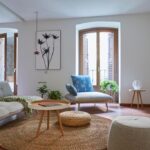
The space is beautiful in an understated way – almost Nordic. White tablecloths, wooden chairs that echo the window frames, and a glass-enclosed terrace bar flooded with natural light. The only pop of color: turquoise water glasses.
In autumn and early winter, the kitchen serves a seven-course tasting menu built around local wild mushrooms – €70 per person. The cooking is modern-regional: deeply respectful of local ingredients without being showy. Precise and quietly confident.
Chef Alba de Pablo trained in two of Spain’s most celebrated Michelin kitchens – Ángel León’s in Cádiz and the Roca brothers’ in Girona – but her greatest mentor is her father, Carlos de Pablo, one of the founders of the mushroom congress and a beloved chef for over 40 years. He still cooks by her side.
Following the Duero River
Soria sits on the banks of the Duero River, which eventually flows all the way to Porto, Portugal. A stroll along its banks is one of the most peaceful things you can do here – two kilometers of walking between two riverside churches, through wild trees that turn spectacular shades of amber in autumn.
Start at the Monasterio de San Juan de Duero, a Castilian Romanesque gem built in the first half of the 12th century by the Knights of St. John of Jerusalem. In October, the site is the backdrop for the haunting Las Ánimas festival – a procession of giant puppets, knights’ skeletons, torchlight, drummers, and fire that culminates in a barefoot walk across hot embers by the river. Worth planning a trip around.
The second landmark is the 17th-century church of San Saturio, perched dramatically above the river. According to tradition, Saturio was a nobleman born in 493 who gave away his fortune and lived as a hermit in the caves along the riverbank. He was declared the city’s patron saint, and a two-week festival in his honor still takes place every October.
Wine: Ribera del Duero
You cannot visit Soria without talking about wine.
Ribera del Duero is one of Spain’s most important wine regions, with 2,500 years of winemaking history. Along 115 kilometers of the Duero valley, some 300 wineries operate at altitudes of 700-1,000 meters above sea level. The extreme climate – 42°C in summer, down to -20°C in winter, with very little rainfall – produces small, thick-skinned grapes that ripen slowly and develop intense concentration.
The wines here are powerful, deeply colored, and richly fruited. All produced from a single grape variety: Tempranillo, also called Tinto Fino or Tinto del País.
Ribera del Duero is often compared to La Rioja (about 200 km north), which also centers on Tempranillo – but the two regions produce dramatically different wines. La Rioja sits lower, gets more Atlantic influence, and produces more elegant, lighter-colored wines. Ribera is raw, concentrated, and singular.
A Hidden Jewish Legacy in the Wine Cellar
In the village of Peñaranda de Duero, just outside Soria, the manager of Hospedería Jaramillo – Mamen Valdés – took us on a tour of the underground wine cellar beneath the hotel restaurant. Partway through, she led us into a small, dim room.
“This was a mikveh,” she said. A Jewish ritual bath, where women would immerse before their wedding day.
The mikveh was active until the 15th century. Today, the same space is used for treading grapes.
In the 13th century (possibly earlier), Soria had a significant Jewish community – some historians estimate they made up 20% of the city’s population. The family name Soriano traces back to this region. Walking through the cellar, the centuries felt suddenly very close.
The hotel’s signature dish is Lechazo – milk-fed lamb, slaughtered before 35 days old, slow-roasted in a brick oven for three hours. “Eat it with your hands,” Mamen insisted. “And soak up the juices with bread.” The bread in question is Torta de aceite, an olive oil flatbread with a texture somewhere between challah and focaccia.
The winery’s own wine, Cruz Sagra – a Tempranillo aged at least nine months in French oak – won Best Wine in Ribera del Duero 2023. Vanilla, walnuts, and dark berries. Outstanding.
Getting There & Practical Tips
- By car: Soria is roughly 2.5 hours from Madrid and 3 hours from Bilbao – best reached by car.
- When to go: October-February for mushroom and truffle season; October for the Las Ánimas festival.
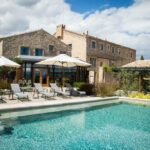
- Stay: Hospedería Jaramillo in Peñaranda de Duero has 13 authentic rooms – a wonderful base for exploring the surrounding wine country.
- Don’t miss: A truffle hunt at Encitruf, dinner at El Tilo de Vallecas, and a slow walk along the Duero.
Inbal Cabiri is a Barcelona-based travel writer and photographer covering Spain, Greece, and Portugal for Israeli publications including Haaretz, Maariv, and Ynet.